
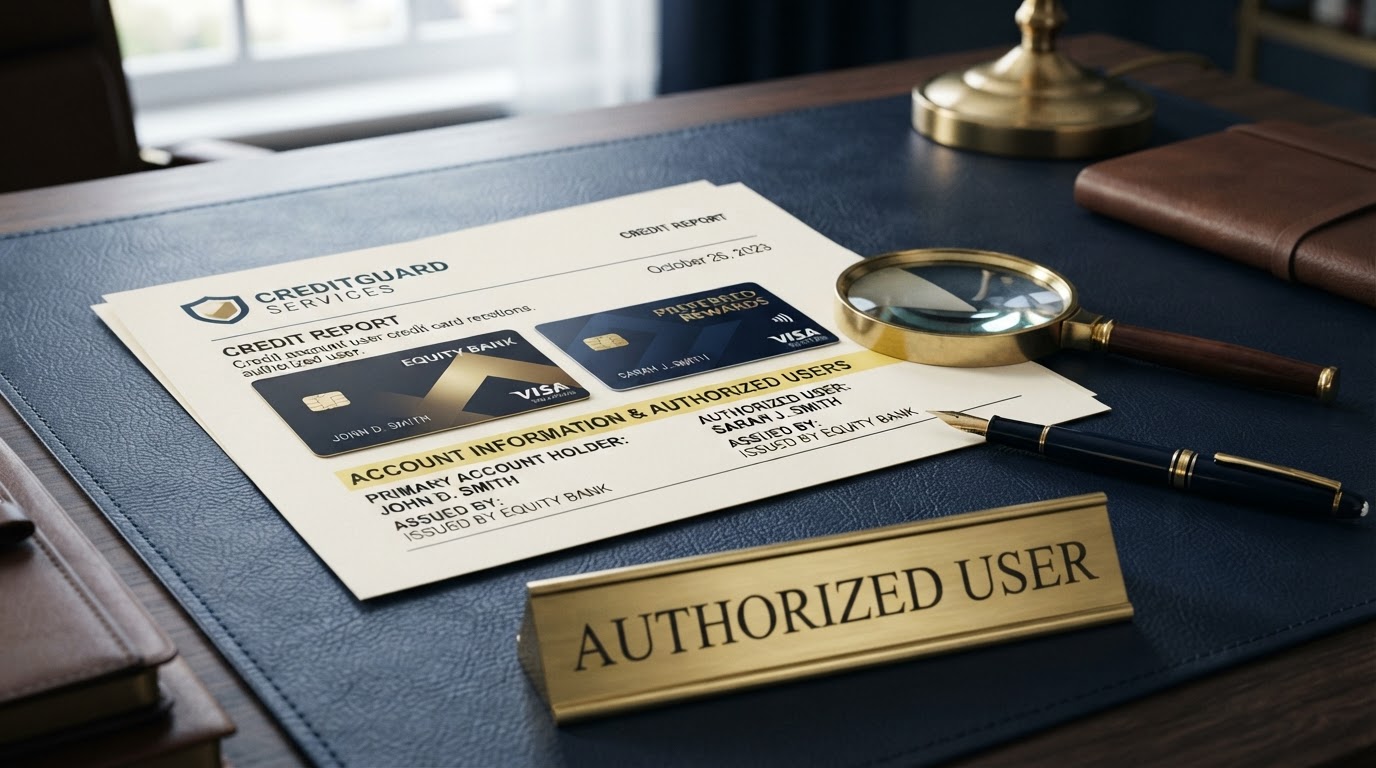
Few topics in credit building are as misunderstood — or as aggressively marketed — as the authorized user tradeline. You have probably seen the pitch: pay a fee, get added to a stranger's old, high-limit credit card, and watch your score jump overnight. It sounds like a shortcut. And that is exactly why Damon Boswell and Ashley Boswell at Blueprint Business Advisors approach this topic with caution and radical transparency. Here is an honest, web-researched look at what authorized user tradelines actually are, how they affect your FICO Score, and why we will not sell you a purchased tradeline until it has cleared a consumer-credit legal review.
What Is a Tradeline?
Before we talk about authorized users, we need to define the word itself. According to Experian, a tradeline is simply an account listed on your credit report — like a credit card, auto loan, or mortgage. Each tradeline includes details such as the account type, your payment history, the current balance, the credit limit, and the account status. 'A tradeline is not a product you buy,' explains Damon Boswell. 'It is a record of an account. Every credit card you have ever opened is a tradeline. The confusion starts when people use the word to mean something it does not.' Lenders and creditors report this information to the credit bureaus, and the bureaus use it — along with inquiry data — to calculate your credit scores.
What Is an Authorized User?
An authorized user is someone who has been added to another person's credit card account. The authorized user receives a card with their name on it and can typically make purchases, but they are not legally responsible for repaying the debt — that responsibility stays with the primary account holder. According to myFICO, authorized user accounts can appear on your credit report and impact your FICO Score, which means both positive and negative information on that account can affect you. 'Being an authorized user is a legitimate, legal arrangement,' notes Ashley Boswell. 'A parent adding a teenager to a card so they can build credit is the textbook example. The problem is not the concept — it is how it gets abused.'
How Being an Authorized User Can Help Your Score
When you are added as an authorized user to a well-managed account — one with a long history, a high credit limit, and a flawless on-time payment record — that account's positive history can appear on your credit report and may help your score. According to myFICO, this can be beneficial if the account is managed well, as it can help build a positive credit history. The authorized user account can contribute to several FICO factors at once: payment history (the on-time payments), amounts owed (the available credit limit lowering your utilization), and length of credit history (the age of the account). 'A properly placed authorized user account can add age and limit to a thin profile,' explains Damon Boswell. 'It is one tool among several — not a magic button.'
The Catch: It Can Also Hurt You
Here is the part the marketing never mentions. According to myFICO, if the primary account holder misses payments or has high utilization, it could negatively impact the authorized user's FICO Score. That means the same account that was supposed to help you can drag you down if the primary holder runs up the balance or pays late. 'You are tying your score to someone else's behavior,' warns Ashley Boswell. 'If that person has a bad month, your score has a bad month — and you have no control over it.' The good news, per myFICO, is that because you are not legally responsible for the debt, you can request to be removed as an authorized user if the account becomes delinquent, and the account will be removed from your credit report.
Authorized User Accounts Have Less Impact Than Primary Accounts
This is a critical detail that most tradeline sellers gloss over. According to myFICO, in recent versions of the FICO Score, authorized user accounts have less impact than primary accounts. So while being an authorized user can help build credit history, it is also important to have credit accounts where you are the primary account holder to show that you can manage credit responsibly on your own. 'The scoring models got smarter,' notes Damon Boswell. 'They recognized that an authorized user account does not prove you can manage credit — it only proves someone else can. That is why a profile built entirely on authorized user accounts looks thin and suspicious to a real underwriter.' In older versions of the FICO Score, authorized user accounts were treated the same as the primary account holder's — which is part of what created the tradeline-selling industry in the first place.
What Happens When You Are Removed From a Tradeline
Authorized user arrangements are not permanent. According to Experian, when you are removed from a tradeline it can affect your credit, depending on the type of tradeline and other factors. The tradeline will no longer appear on your credit report, and you lose the potential to build credit as an authorized user. If the tradeline had positive information that was helping your scores, the removal could cause your scores to drop. 'This is the hidden risk of relying on someone else's account,' explains Ashley Boswell. 'The day you are removed — whether by choice, by the primary holder, or because the account is closed — you lose every benefit it was giving you. If you have not built your own primary accounts in the meantime, your score can fall right back to where it started.'
The Honest Truth About Buying Tradelines
This is where Damon Boswell and Ashley Boswell draw a firm line. There is an entire industry built around selling access to authorized user positions on strangers' credit cards — often marketed as 'seasoned tradelines' that promise instant score increases. According to Experian, buying tradelines is not advised, and there are better alternative ways to build credit. The core problem is that purchasing a tradeline to artificially inflate your credit score can misrepresent your true creditworthiness — essentially misleading lenders about your actual credit history. 'If you buy a tradeline, you are renting someone else's good behavior to make yourself look more creditworthy than you are,' says Damon Boswell. 'That is not credit building. That is credit theater.'
The Legal and Regulatory Risk
In the United States, purchasing tradelines is not directly prohibited by law, but using them for fraudulent purposes is considered a criminal offense. The enforcement risk today centers more on how tradelines are marketed than on the practice itself, with the FTC and CFPB continuing to scrutinize companies that promise guaranteed score increases or market tradelines in ways that misrepresent a consumer's true credit profile. 'The legal landscape around purchased tradelines is murky, and it is getting murkier,' warns Ashley Boswell. 'Regulators are watching how these products are sold. That is not a space we are willing to operate in without a clear legal opinion.'
Our Compliance Hold on Purchased Tradelines
This is why Blueprint Business Advisors has paused any purchased-tradeline offer. Before we would ever activate a consumer credit-repair or purchased-tradeline service, the contracts, disclosures, cancellation rights, payment practices, and marketing language must receive a consumer-credit legal review for compliance with the Credit Repair Organizations Act and applicable state laws. 'We will not sell you a product we cannot legally stand behind,' Damon Boswell states plainly. 'If a consumer-credit attorney reviews the exact service and the marketing language and clears it, we will revisit it. Until then, it is on hold — full stop.' Instead, we offer personal credit profile education, authorized-user guidance, and individualized credit-readiness planning. Results vary, and no score increase is guaranteed.
What We Actually Recommend Instead
Rather than renting someone else's credit history, Damon Boswell and Ashley Boswell help you build your own. The tools we guide clients through are slower, but they are permanent and they are yours. A secured credit card generates a real monthly record of you borrowing and repaying, which strengthens payment history and utilization — the two factors that make up 65% of your FICO Score. A credit-builder loan adds an installment account to your mix, proving you can handle a different type of credit. And a legitimate authorized user placement — added to a family member's or partner's well-managed account with full transparency — can add age and limit while you build your own primary accounts in parallel. 'The slow path is the real path,' explains Ashley Boswell. 'Every account you build yourself is an asset no one can take away from you. A purchased tradeline is a rental that expires.'
How Authorized User Guidance Fits Our Credit-Readiness Planning
At Blueprint Business Advisors, authorized user guidance is part of a broader credit-readiness plan — not a standalone product. We review your real credit reports from all three bureaus, identify which FICO factors are weakest, and build a personalized roadmap that may include disputing inaccurate, outdated, or unverifiable information, opening a secured card, guiding a credit-builder loan, and — where appropriate and transparent — helping you understand whether a legitimate authorized user placement makes sense for your situation. 'We do not hand you a tradeline and walk away,' says Damon Boswell. 'We build a complete profile that tells a true, verifiable story to any lender who pulls it.' We dispute inaccurate information with the bureaus; we do not guarantee the removal of any specific item, any particular credit-score increase, or any specific outcome.
The Difference Between Building and Borrowing Credit
There is a philosophical line worth drawing clearly. Building credit means creating a genuine, verifiable record of your own responsible borrowing over time. Borrowing credit — through a purchased tradeline — means temporarily displaying someone else's record as your own. The first makes you stronger permanently. The second makes you look stronger temporarily. 'A lender who looks closely can tell the difference,' notes Ashley Boswell. 'A manual underwriter reviewing a mortgage application will ask why your only aged account is an authorized user card on someone you cannot explain a relationship with. That is a question you do not want to have to answer.' This is especially relevant for mortgage lending, where automated underwriting systems like Desktop Underwriter do consider authorized user tradelines — but a human underwriter can still question them.
Common Authorized User Mistakes to Avoid
Even with legitimate authorized user arrangements, people make predictable mistakes. First, being added to an account with high utilization — which hurts your amounts-owed factor instead of helping it. Second, being added to an account with a recent late payment — which damages your payment history. Third, relying on authorized user accounts as your only credit, so your score collapses the moment you are removed. Fourth, paying a stranger for a tradeline without understanding the legal and removal risks. 'Every one of these mistakes comes from treating the authorized user arrangement as a shortcut instead of a tool,' warns Damon Boswell. 'Used correctly, alongside your own primary accounts, it can help. Used as a substitute for real building, it is a trap.'
How This Connects to the Bigger Picture
Authorized user guidance is one small piece of the full Blueprint Business Advisors ecosystem. Good personal credit — built honestly — gets you access to capital. That capital can fund a business. A funded business can build its own standalone business credit profile separate from your personal score. And once you have built credit, funding, and a business, legacy planning protects all of it. 'The authorized user card is not the destination,' says Ashley Boswell. 'It is, at most, a small assist on the first mile of a much longer road. We help you walk the whole road — not just rent a ride for the first block.' We help make sure your business is properly structured and visible to the major business-credit bureaus so it can begin developing its own credit profile — but that work is built on a personal credit foundation that is genuinely yours.
How Blueprint Business Advisors Helps
Damon Boswell and Ashley Boswell review your real credit reports from all three bureaus — Experian, Equifax, and TransUnion — and build a personalized credit-readiness plan that may include disputes of inaccurate information, secured card strategies, credit-builder loan guidance, and transparent authorized-user guidance where appropriate. We do not sell purchased tradelines, and any such service remains on compliance hold pending consumer-credit legal review. We are not a lender, and we do not guarantee any specific score increase, the removal of any specific item, or any specific outcome. 'Our goal is to help you build a credit profile that is real, verifiable, and permanently yours,' says Damon Boswell. 'Shortcuts fade. Foundations hold.'
Start With a Free Consultation
If you have been tempted by tradeline offers promising instant score jumps, or if you simply want to understand whether an authorized user arrangement makes sense for your situation, it is time to get an honest answer. Book a free, no-pressure consultation with Damon Boswell and Ashley Boswell at Blueprint Business Advisors. We will review your credit reports, map your profile across all five FICO factors, and build a personalized roadmap that builds real credit — not rented history. The honest path takes longer. It also lasts.
Important Disclaimer
Blueprint Business Advisors is not a lender, a credit bureau, or a credit card issuer. We assist with preparation, education, and placement only. We dispute inaccurate, outdated, or unverifiable information on credit reports; we do not guarantee the removal of any specific item, any particular credit-score increase, or any specific outcome. Credit scoring models and reporting practices are controlled by the credit bureaus and scoring companies, including FICO. We do not sell purchased tradelines; any purchased-tradeline service remains on compliance hold pending consumer-credit legal review under the Credit Repair Organizations Act and applicable state laws. The information about authorized user accounts and tradelines cited is based on publicly available guidance from Experian and myFICO and is educational, not legal advice. Consult a qualified consumer-credit attorney for legal questions specific to your situation.

