
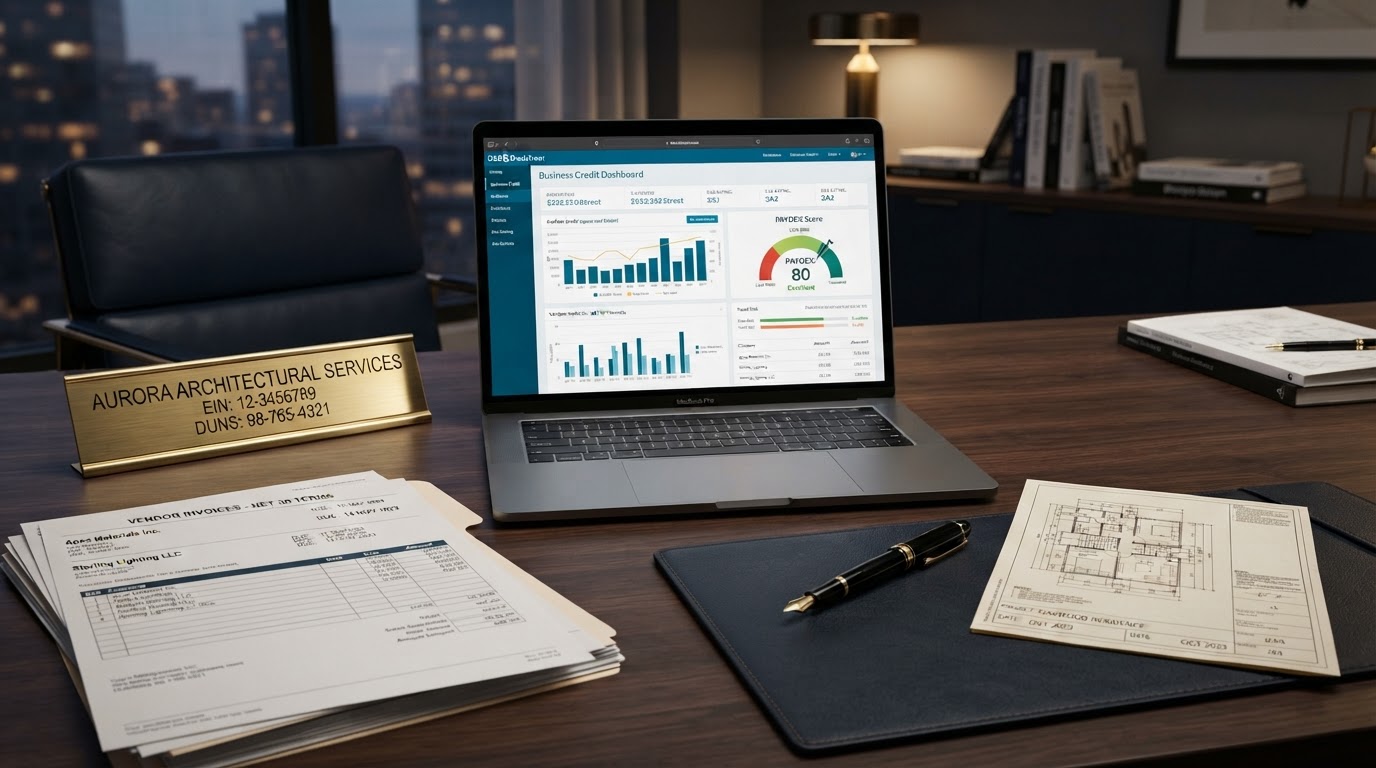
When Damon Boswell begins business credit work with a new client, the first question is almost always the same: 'What is a DUNS number, and do I actually need one?' The second question, once they have one, is: 'Now what is a PAYDEX score, and how do I get a good one?' These two numbers — the DUNS number and the PAYDEX score — are the foundation of your business credit profile with Dun & Bradstreet, and misunderstanding them is one of the most common reasons entrepreneurs stall out in the early tiers of business credit building. Here is an honest, web-researched look at what each one actually is, how they work together, and how Damon Boswell and the team at Blueprint Business Advisors help clients use them to build a credit profile that stands on its own.
What Is a D-U-N-S Number?
A D-U-N-S Number is a unique nine-digit identifier assigned to a business by Dun & Bradstreet. According to Nav, it is tied to your company's unique D-U-N-S Number and is the global standard for tracking business credit. Think of it as the Social Security number for your business — except it is issued by a private company, not the government, and it is what lenders, vendors, and even some government contractors use to pull your business credit profile. 'Your DUNS number is the address where your business credit file lives,' explains Damon Boswell. 'Without it, you do not have a file. Without a file, you do not have a score. It is step one of everything that follows.'
How to Get a DUNS Number
You apply for a D-U-N-S Number through Dun & Bradstreet. The free application takes about 30 business days to process, though expedited options are available for a fee. You will need your legal business name, your physical address, your EIN, and basic information about your business structure. 'We help clients apply for the free version first,' notes Damon Boswell. 'There is no reason to pay for expedited service when you are just starting to build the file. The 30-day wait is normal, and it gives you time to set up the vendor accounts that will eventually feed the score.'
What Is a PAYDEX Score?
Your Dun & Bradstreet PAYDEX Score is a 1-to-100 rating of how reliably your business pays certain accounts that are monitored on its credit report. According to Nav and Ramp, the PAYDEX measures a business's past payment performance based on information in the Dun & Bradstreet Data Cloud, and it is based entirely on payment data reported by vendors, suppliers, and creditors. 'If the DUNS number is the address, the PAYDEX score is the reputation at that address,' says Damon Boswell. 'It answers one question: does this business pay its bills on time?'
How the PAYDEX Score Is Calculated
According to Nav, the PAYDEX score is calculated through a simple three-step process. First, a vendor extends credit terms to your business and issues an invoice. Second, you pay according to, ahead of, or behind schedule. Third, Dun & Bradstreet assigns a weight based on your payment performance against the terms. The score is not based on your revenue, your personal credit, or your business plan — it is based purely on whether you paid your vendors when you said you would. 'This is the part people underestimate,' explains Damon Boswell. 'You cannot talk your way into a good PAYDEX score. You can only pay your way into one. Every invoice is a data point, and Dun & Bradstreet is watching.'
The PAYDEX Score Ranges and What They Mean
According to Nav, the PAYDEX score ranges map directly to payment timing. A score of 100 means you paid 30 days before terms. A score of 90 means you paid 20 days before terms. A score of 80 means you paid on time — 0 days beyond terms. From there, the score drops as you pay later: 70 means 15 days beyond terms, 50 means 30 days beyond terms, 40 means 60 days beyond terms, and so on down to 1 for 120 or more days beyond terms. 'The target is 80,' says Damon Boswell. 'Eighty means you pay exactly on time. But Dun & Bradstreet rewards early payments more than on-time payments — so paying ahead of the due date can push you to 90 or 100, which signals an even stronger payer.'
What It Takes to Generate a PAYDEX Score
You do not get a PAYDEX score the moment you receive a DUNS number. According to Nav, generating a PAYDEX score requires a D-U-N-S Number plus two tradelines or three trade experiences reporting to Dun & Bradstreet. That means you need at least two vendors extending credit and reporting your payment behavior to D&B before a score even appears. 'This is the trap,' warns Damon Boswell. 'Entrepreneurs get a DUNS number, assume they have business credit, and then check their profile and see nothing. A DUNS number without reporting tradelines is an empty file. You need vendors that actually report to D&B to populate it.'
Net-30 Vendor Accounts: The First Tradelines
This is where Net-30 vendor accounts come in. You order supplies, get invoiced with 30-day payment terms, and the vendor reports your payment behavior to a commercial bureau. The catch is that not every net-30 vendor actually reports, and the ones that do not all report to the same bureau. 'We identify appropriate business vendors that may extend payment terms and report positive payment history when the account is used and paid properly,' explains Damon Boswell. 'Opening vendor accounts alone does not automatically raise a business credit score — what matters is consistent, on-time or early payment history over time. We help clients pick vendors that report to Dun & Bradstreet specifically, because that is what feeds the PAYDEX.'
PAYDEX vs. Other Business Credit Scores
The PAYDEX is not the only business credit score, and Damon Boswell makes sure clients understand the full landscape. According to Nav, the major business credit scores include the Dun & Bradstreet PAYDEX (1-100, based on trade payment performance, requiring two tradelines and three experiences), the Experian Intelliscore Plus (1-100, based on payment history, credit utilization, and company info, requiring one tradeline or one demographic element), the Equifax Business Delinquency Score (224-580, based on trade payment performance, requiring one active trade in the last 60 months), and the FICO Small Business Scoring Service (0-300, based on business and personal credit). 'Each bureau has its own score, and they do not talk to each other,' notes Damon Boswell. 'A perfect PAYDEX does not mean a perfect Experian business score. That is why we build across all three bureaus, not just one.'
Why an 80 PAYDEX Matters for Funding
An 80 PAYDEX score signals to lenders that your business pays on time, which is the baseline most funding programs want to see. According to Ramp, the PAYDEX is what lenders and suppliers look at to decide whether to extend credit to your business. 'An 80 is the gateway,' says Damon Boswell. 'It does not guarantee funding — nothing does — but it removes one of the most common reasons a lender says no. When your business pays its bills on time and the bureaus can see it, you are a more credible borrower.'
The Personal Guarantee Trap
A strong PAYDEX score is also what allows a business to eventually access funding without a personal guarantee. A personal guarantee is a contractual promise that you, the individual owner, will personally repay the business debt if the business cannot. Most business credit cards require one, even when marketed as business cards. 'The whole point of building a standalone business credit profile is to reach the tier where your business qualifies on its own merit,' explains Damon Boswell. 'A strong PAYDEX, built over time with reporting vendors, is what gets you there. We help make sure your business is properly structured and visible to the major business-credit bureaus so it can begin developing its own credit profile. Scores and reporting are controlled by the credit bureaus, and no perfect business credit score is guaranteed.'
How Long It Takes to Build a PAYDEX
Building a PAYDEX score is a longer-term process than personal credit repair. You need the DUNS number, then reporting vendor accounts, then months of on-time or early payments before a score generates and stabilizes. 'We tell clients to expect months, not weeks,' notes Damon Boswell. 'The process is slower than personal credit repair, but each tier unlocks access to larger funding opportunities. Patience and consistency are the entire game.'
How Blueprint Business Advisors Helps
Damon Boswell guides clients through every step of this process: DUNS and EIN optimization, identifying and opening Net-30 vendor accounts that report to Dun & Bradstreet, building the trade experiences needed to generate a PAYDEX, and progressing through the tiers of business credit. We help make sure your business is properly structured and visible to the major business-credit bureaus so it can begin developing its own credit profile. Scores and reporting are controlled by the credit bureaus, and no perfect business credit score is guaranteed. Qualified businesses may become eligible for $20,000 or more in business credit without a personal guarantee — approval, limits, and terms are determined by participating creditors and are not guaranteed. 'Our goal is to help you build a credit profile that stands on its own,' says Damon Boswell. 'We cannot promise a perfect score, but we can make sure every step is done right.'
Start With a Free Consultation
If you have a DUNS number but no score, or if you do not have either yet, it is time to build the foundation the right way. Book a free, no-pressure consultation with Damon Boswell at Blueprint Business Advisors. We will review your business structure, your entity setup, and your current vendor accounts, and build a personalized roadmap to generate and strengthen your PAYDEX score across all three business credit bureaus.
Important Disclaimer
Blueprint Business Advisors helps entrepreneurs strengthen their business credit foundation and prepare for suitable funding opportunities. We are not the lender, and all approvals, limits, rates, and terms are determined by third-party creditors. We assist with preparation and placement only; we do not guarantee approval, any specific funding amount, a particular credit-score increase, or any specific outcome. Credit scoring models and reporting practices are controlled by the credit bureaus, including Dun & Bradstreet, Experian Business, and Equifax Business. The PAYDEX score ranges and requirements cited are based on publicly available information from Dun & Bradstreet, Nav, and Ramp and are educational, not a guarantee of individual results.

