
If you have been denied for every credit card you have applied for, or if you are starting from zero with no credit history at all, the conversation almost always circles back to the same tool: the secured credit card. It is not glamorous, it is not flashy, and it will not impress anyone at dinner — but it is one of the most reliable, honest ways to build a credit profile from the ground up. At Blueprint Business Advisors, Damon Boswell and Ashley Boswell walk clients through this exact step, because a secured card is often the foundation that everything else — funding, business credit, legacy — eventually gets built on. Here is a web-researched, no-fluff look at how secured credit cards actually work in 2026, and how to use one the right way.
What Is a Secured Credit Card?
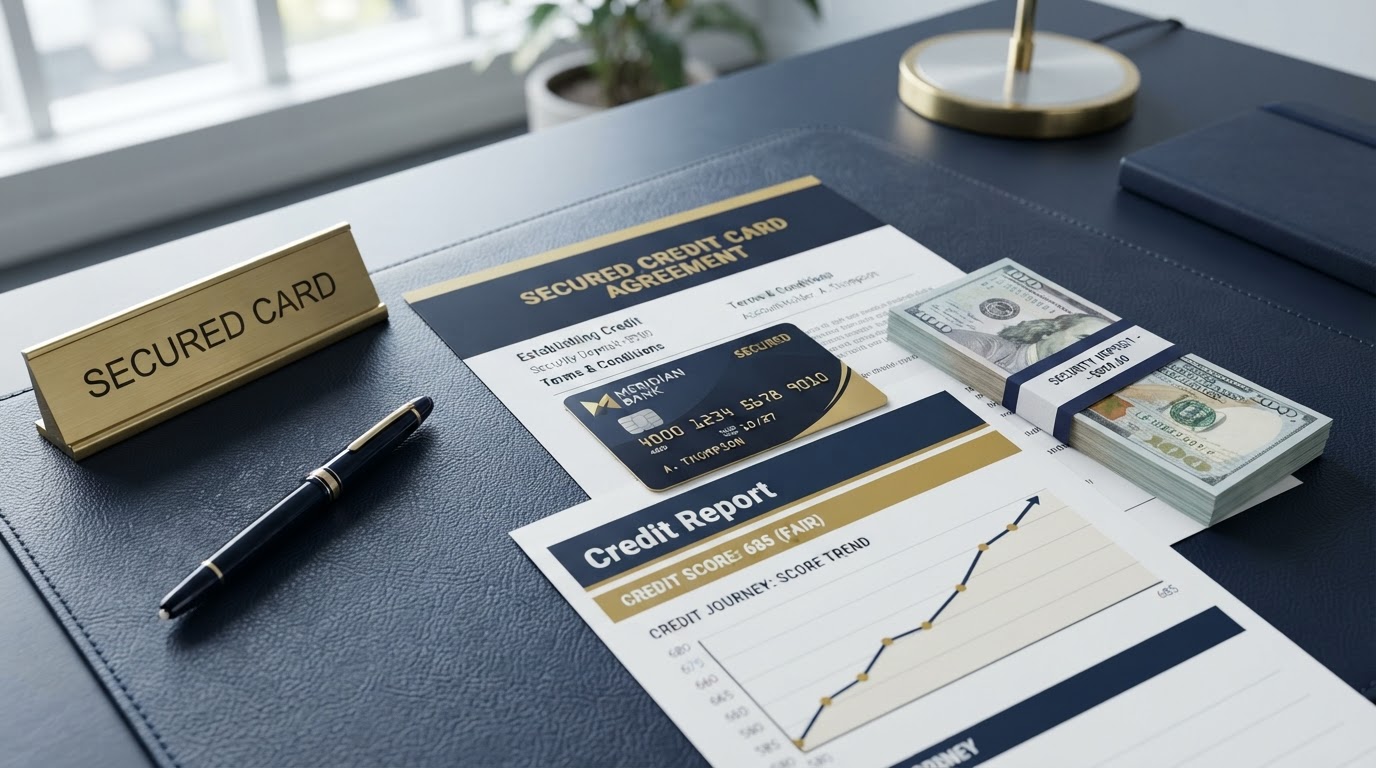
A secured credit card is a credit card that requires a refundable security deposit to open the account. According to Capital One, the cardholder typically makes a one-time deposit that acts as collateral for the card issuer — a lot like the security deposit a landlord holds for an apartment. Because the deposit reduces the lender's risk, a secured card can often be easier to get approved for than a traditional unsecured credit card, which makes it suitable for people who are trying to establish or rebuild credit. 'A secured card is not a prepaid card and it is not a debit card,' explains Ashley Boswell. 'You are still borrowing money each month and paying it back. The deposit is just the lender's safety net — not your spending balance.'
How the Deposit Becomes Your Credit Limit
In most cases, your security deposit determines your credit limit. According to Experian, a $200 deposit typically gives you a $200 credit limit. Some issuers, like Capital One with its Platinum Secured card, may offer a $200 credit line with a deposit as low as $49 depending on your creditworthiness — meaning your credit limit can sometimes be higher than your deposit. Credit limits generally start at $200 and may go as high as $3,000 on some cards. 'The deposit is refundable,' notes Damon Boswell. 'When you eventually pay off and close the account, or when you upgrade to an unsecured card, you get that money back — minus any outstanding balance and fees. You are not losing the deposit by using the card.'
The One Detail That Makes or Breaks It: Bureau Reporting
Here is the detail that ruins more secured-card strategies than any other: the card only helps your credit if the issuer reports your activity to the credit bureaus. According to Experian, in order to build credit with a secured card, you need to make sure that the card issuer reports to at least one of the three credit bureaus — but ideally all three. 'We have seen clients open a card, use it perfectly for six months, and see zero score movement because the issuer only reported to one bureau — or worse, none,' warns Ashley Boswell. 'Before you apply, confirm the card reports to Experian, Equifax, and TransUnion. If it does not, you are building credit in a room no lender is looking into.' Capital One, Discover, and most major issuers report secured card accounts to all three bureaus, which is why we steer clients toward established issuers rather than obscure products.
How a Secured Card Actually Builds Your Score
Using a secured credit card responsibly can help you build credit or improve your credit score — but only if you use it the right way. Responsible use means making on-time payments every single month, keeping your credit utilization low, and understanding the terms of your card. 'The secured card does not build your credit by existing in your wallet,' explains Damon Boswell. 'It builds your credit by generating a monthly record of you borrowing small amounts and paying them back perfectly.' That record feeds two of the five FICO factors we covered earlier this month: payment history (35%) and amounts owed (30%). Every on-time payment strengthens payment history. Every month you keep the balance low relative to the limit strengthens utilization. Do both consistently, and the score moves.
Step 1: Start With a Deposit You Can Afford
Many secured cards require a minimum deposit of $200. Some offer more flexibility — Capital One Platinum Secured may require as little as $49 depending on your profile, and the Self Secured Visa starts at $100. According to Chime, the guidance is simple: start with whatever amount fits comfortably in your budget, because a higher deposit often gives you a higher credit limit, which can help keep your utilization ratio low. 'We help clients look at their real cash flow before they commit to a deposit,' says Ashley Boswell. 'You do not want the deposit itself to become a financial strain. The point is to build credit, not to create stress.'
Step 2: Keep Utilization Low — Even on a Small Limit
This is where most people with a $200 limit get it wrong. If your limit is $200, spending $150 means a 75% utilization rate — which looks risky to the scoring models and can actually drag your score down even as you are paying on time. According to Experian, you should broadly keep utilization below 30% to avoid a substantial negative impact, and the highest credit scores tend to belong to people with utilization below 10%. 'On a $200 card, 30% is only $60,' notes Damon Boswell. 'That feels tiny, but it is exactly the discipline that builds a strong score. Use the card for one small recurring charge — a subscription, a phone bill — and pay it off before the statement closes.'
Step 3: Pay On Time, Every Time, Without Exception
A secured card will not help you if you miss payments. In fact, it can hurt you just like any other card. According to Experian, a history of on-time payments will do the most to help your credit score, so take care not to miss a due date. The CFPB advises that one way to avoid interest charges on new purchases is to pay off your balance on time every month. 'Set up autopay for at least the minimum so you never miss a due date,' advises Ashley Boswell. 'Then manually pay the full balance before the statement closing date so a low balance gets reported. That combination is what we teach every client who is starting with a secured card.'
Step 4: Be Patient — Building Credit Takes Time
According to the Consumer Financial Protection Bureau, building good credit takes time. There is no hard-and-fast rule for how quickly a secured card will move your score, but the consistent approach is to use the card for small purchases and pay off the balance every month. Assuming you make all your payments on time, some issuers will raise your credit limit after a certain period, and many will offer the option to upgrade to an unsecured credit card. 'We tell clients to expect meaningful movement within the first several months of perfect habits, not overnight,' says Damon Boswell. 'The secured card is the seed. Consistency is what makes it grow.'
Step 5: Do Not Rush to Close the Card After You Upgrade
This is a mistake that undoes months of work. According to Experian, once you graduate to an unsecured card, you should not rush to close your secured credit card — because closing an account reduces both your available credit and the average age of your accounts, which can negatively affect your credit score. Instead, keep the account open, put a small regular purchase on it, and pay it off each month to keep it active. 'Closing the secured card the day you get an unsecured one is the most common self-inflicted wound we see,' warns Ashley Boswell. 'That old limit is helping your utilization and that account age is helping your history. Let both keep working for you.'
The Upgrade Path: From Secured to Unsecured
The goal of a secured card is not to stay on it forever. Many issuers review your account after a set period — Discover, for example, automatically reviews secured card accounts starting at 8 months to see if you qualify for an upgrade to an unsecured card and a refund of your deposit. Capital One reviews accounts after the first five on-time monthly payments for a potential credit line increase. 'The upgrade is the graduation moment,' explains Damon Boswell. 'When the issuer trusts you enough to give you an unsecured line and return your deposit, it means your responsible behavior has done its job. That is when the secured card has done exactly what it was designed to do.'
Secured Cards vs. Other Credit-Building Tools
A secured card is powerful, but it is not the only tool — and at Blueprint Business Advisors, Damon Boswell and Ashley Boswell rarely recommend just one. Alongside secured cards, we guide clients through credit-builder loans, authorized user placements, and credit-readiness planning to build a well-rounded profile that hits multiple FICO factors at once. 'A secured card strengthens payment history and utilization,' notes Ashley Boswell. 'A credit-builder loan adds an installment account that strengthens your credit mix. An authorized user placement can add age and limit to your profile. Together, they build a complete picture — not a one-trick profile.' Results vary, and no specific score increase is guaranteed — but layering the right tools is what separates a slow grind from a real strategy.
How Secured Cards Connect to the Bigger Picture
A secured card is usually step one of a much longer journey. Good personal credit gets you access to capital. That access to capital can fund a business. A funded business can build its own standalone business credit profile. And once you have built credit, funding, and a business, legacy planning protects all of it. 'The secured card is the first domino,' says Damon Boswell. 'It is small, it is humble, and it is where almost every real credit journey begins. Skip it or misuse it, and the whole chain never starts.' We help make sure your business is properly structured and visible to the major business-credit bureaus so it can begin developing its own credit profile — but that work is built on a personal credit foundation that often starts with a single $200 secured card used the right way.
Common Mistakes to Avoid
The most common mistakes we see are predictable and avoidable. First, choosing a card that does not report to all three bureaus. Second, maxing out the small limit and reporting high utilization. Third, missing a payment because the limit felt too small to take seriously. Fourth, closing the card the moment an unsecured offer arrives. 'Every one of these mistakes takes a tool designed to help you and turns it into a setback,' warns Ashley Boswell. 'The secured card is forgiving on approval but unforgiving on misuse. Respect the process and it rewards you. Ignore the rules and it punishes you like any other card.'
How Blueprint Business Advisors Helps
Damon Boswell and Ashley Boswell review your real credit reports from all three bureaus, identify whether a secured card is the right next step for you, and guide you through choosing the right card, setting the right deposit, managing utilization, and timing your payments so the card builds your score instead of hurting it. We pair the secured card strategy with disputes of inaccurate, outdated, or unverifiable information on your credit reports, credit-builder loan guidance, authorized user placements, and credit-readiness planning. We are not a lender, and we do not guarantee any specific score increase — but we give you the exact framework the scoring models reward. 'Our goal is to help you understand and prepare for the process,' says Damon Boswell. 'A secured card is simple, but simple does not mean obvious. We make sure you do it right the first time.'
Start With a Free Consultation
If you have been denied for every card you have applied for — or if you are starting from zero with no credit history — a secured card is almost certainly your best first step. Book a free, no-pressure consultation with Damon Boswell and Ashley Boswell at Blueprint Business Advisors. We will review your credit reports, map your profile across all five FICO factors, and build a personalized roadmap that starts with the right secured card and ends with a credit profile that opens real doors. The first step is small. The payoff is not.
Important Disclaimer
Blueprint Business Advisors is not a lender, a credit card issuer, or a credit bureau. We assist with preparation, education, and placement only. All approval decisions, credit limits, deposit requirements, rates, and terms for any credit product are determined by third-party lenders and card issuers. We dispute inaccurate, outdated, or unverifiable information on credit reports; we do not guarantee the removal of any specific item, any particular credit-score increase, or any specific outcome. Credit scoring models and reporting practices are controlled by the credit bureaus and scoring companies, including FICO. The card details and deposit requirements cited are based on publicly available information from Experian, Capital One, Chime, and the Consumer Financial Protection Bureau and are educational, not a guarantee of individual results or product availability.

