
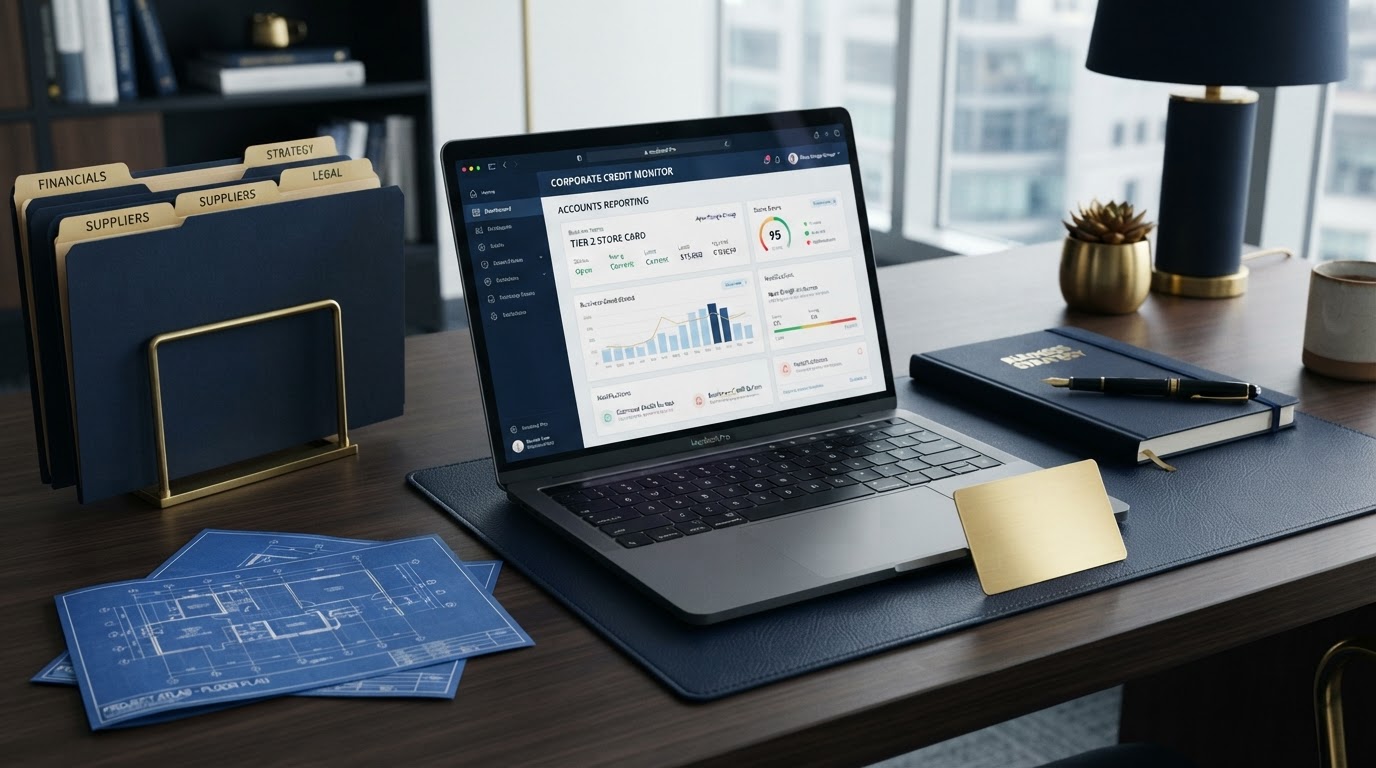
When Damon Boswell walks a client through the business credit tier system, the conversation about Tier 2 store credit cards always raises the same questions. Are store cards real business credit? Do they actually report to the bureaus? Do they require a personal guarantee? The answers matter, because Tier 2 is where many entrepreneurs either build real momentum or get stuck signing personal guarantees that undo the entire purpose of the process. At Blueprint Business Advisors, Damon Boswell helps clients use store credit cards the right way, as a stepping stone in a larger strategy, not a shortcut. Here is an honest, web-researched look at how Tier 2 store credit cards fit into business credit building in 2026.
Where Tier 2 Fits in the Tier System
Business credit building happens in tiers. Tier 1 is your foundational vendor accounts, the Net-30 suppliers that report your payment history to the commercial bureaus. Tier 2 introduces store credit cards in your business name. Tier 3 brings business credit cards and lines of credit. Tier 4 unlocks larger funding vehicles, corporate cards, business loans, and major contracts, ideally without a personal guarantee. 'Tier 2 is the bridge,' explains Damon Boswell. 'You cannot skip Tier 1 and jump to Tier 2, because the store card issuers want to see that your business already has a payment history with reporting vendors. We help clients build three to five Tier 1 tradelines first, then progress to Tier 2 once the foundation is solid.'
What a Tier 2 Store Credit Card Actually Is
According to Credit Suite, Tier 2 contains those vendors that you should qualify for accounts with after you have enough Tier 1 business credit vendors reporting. These are store-branded credit cards issued by retailers, often with more flexible approval requirements than traditional business credit cards, and they are designed to be used for purchases at the issuing retailer. 'A store card is exactly what it sounds like,' notes Damon Boswell. 'It is a credit card tied to a specific retailer. The benefit for business credit building is that many of them report to the business credit bureaus and are easier to qualify for than a general-purpose business credit card, especially for a newer business.'
The Critical Detail: Not Every Store Card Reports
This is the point Damon Boswell emphasizes with every client. Just like with Net-30 vendor accounts, not every store credit card reports to the business credit bureaus. According to Tipalti, the main business credit bureaus are Dun & Bradstreet, Experian, and Equifax, and vendors that report both positive and negative payment history are the ones that actually build your file. 'Before you open a store card, confirm that it reports to at least one business credit bureau,' warns Damon Boswell. 'A store card that does not report is just a payment tool, not a credit-building tool. Both have value, but you have to know which one you are using. We help clients confirm current reporting practices before they apply, because these change over time.'
How Tier 2 Cards Build Business Credit
According to Ramp, on-time payments reported to business credit bureaus establish and strengthen your credit profile. When you use a Tier 2 store card for legitimate business purchases and pay on time or early, and the card reports that behavior to a business credit bureau, you add positive payment history to your file. Over time, that history strengthens your business credit profile and improves your standing with the bureaus. 'The card is the vehicle, the payment is the fuel, the reporting is the engine,' says Damon Boswell. 'Skip any one of those three and nothing happens. We help clients use the cards for real business purchases, time the payments to report positively, and confirm the reporting actually lands.'
The Personal Guarantee Question
This is where Tier 2 gets tricky. According to Bankrate, many business card issuers require you to sign a guarantee that makes you personally responsible for any card debt your business cannot pay. The same is true for many Tier 2 store cards. Before you apply, read the application for the words personal guarantee or joint and several liability. If either appears, the card is functionally personal credit with a business name on it, which defeats the purpose of building a separate file. 'We help clients read the fine print before they apply,' explains Damon Boswell. 'A Tier 2 card with a personal guarantee still builds a payment history, but it keeps your personal assets on the hook. Where possible, we look for store cards that report to the business bureaus without requiring a personal guarantee, or we sequence them so the personal guarantee cards come later when the business profile is strong enough to qualify for non-PG options.'
Vendors That Are Widely Reported to Report
According to FairFigure and Credit Suite, several Tier 2 vendors are widely listed as reporting to at least one business credit bureau. The specific list changes over time, and bureau reporting practices and fees change often, so Damon Boswell always confirms current terms before recommending a card. 'We identify appropriate business vendors that may extend payment terms and report positive payment history when the account is used and paid properly,' says Damon Boswell. 'A vendor that reported last year may have changed its policy this year, so we verify before we recommend. The right Tier 2 card is the one that reports to a bureau your lenders actually check.'
Opening Accounts Alone Does Not Automatically Raise Your Score
This is the line Damon Boswell repeats more than any other. Opening store card accounts alone does not automatically raise a business credit score. What raises the score is consistent, on-time or early payment history reported to the bureaus over time. A store card you open and never use generates no payment history. A store card you use but pay late generates negative history. Only a store card you use regularly, pay on time or early, and that reports that behavior, builds positive credit. 'The account is the vehicle, the payment is the fuel, the reporting is the engine that turns the fuel into a score,' says Damon Boswell. 'Skip any one of those three and nothing happens.'
How Tier 2 Connects to Funding Without a Personal Guarantee
The entire point of progressing through the tiers is to eventually access funding in your business name without a personal guarantee. We help make sure your business is properly structured and visible to the major business-credit bureaus so it can begin developing its own credit profile. Scores and reporting are controlled by the credit bureaus, and no perfect business credit score is guaranteed. Qualified businesses may become eligible for $20,000 or more in business credit without a personal guarantee, approval, limits and terms are determined by participating creditors and are not guaranteed. 'Tier 2 is the bridge between your foundation and your funding,' notes Damon Boswell. 'Get it right, and Tier 3 and Tier 4 become realistic. Get it wrong, and you spend years stuck signing personal guarantees on every account.'
Common Mistakes Damon Boswell Sees
The mistakes are consistent. First, applying for Tier 2 cards before building Tier 1 tradelines, which leads to denials. Second, opening store cards that do not report to any business bureau. Third, signing personal guarantees without reading the fine print. Fourth, using store cards for personal purchases, which muddies the business file. Fifth, paying late, which can show up on a business credit report and drag down the profile. 'We help clients avoid all five,' says Damon Boswell. 'The right sequence, the right cards, the right usage, and the right payment timing. That is the formula.'
How Blueprint Business Advisors Helps
Damon Boswell reviews your business structure, confirms your Tier 1 foundation is solid, and identifies appropriate Tier 2 store credit cards that may report positive payment history when the account is used and paid properly. We help you read the fine print on personal guarantees, sequence your applications, and time your payments to optimize your business credit profile. We track what is being reported about your business, help identify inaccuracies, and show you what factors may be helping or hurting your funding readiness. We help establish and strengthen your business credit profile. Scores and reporting are controlled by the credit bureaus, and no perfect business credit score is guaranteed. We are not the lender, and all approvals, limits, rates and terms are determined by third-party creditors.
Start With a Free Consultation
If you want to build business credit the right way, progressing through the tiers with reporting accounts and a clear path toward funding without a personal guarantee, it is time to get a real roadmap. Book a free, no-pressure consultation with Damon Boswell at Blueprint Business Advisors. We will review your business structure, your current credit profile, and your funding goals, and show you exactly which Tier 2 store cards make sense for your situation.
Important Disclaimer
Blueprint Business Advisors is not a lender, a retailer, or a business credit bureau. We assist with preparation, education, and placement only. All approval decisions, rates, amounts and terms are determined by third-party lenders and creditors. We do not guarantee approval, any specific funding amount, a particular credit-score increase, or any specific outcome. Opening store card accounts alone does not automatically raise a business credit score; positive payment history reported to the bureaus over time is what builds the profile. Scores and reporting are controlled by the credit bureaus, including Dun & Bradstreet, Experian Business, and Equifax Business. The vendor reporting details cited are based on publicly available information from Credit Suite, Tipalti, FairFigure, Ramp, and Bankrate and are educational, not a guarantee of individual results or product availability; bureau reporting and fees change often, so confirm current terms with each vendor before you apply. We are not the lender; all approvals, limits, rates and terms are determined by third-party creditors.

