
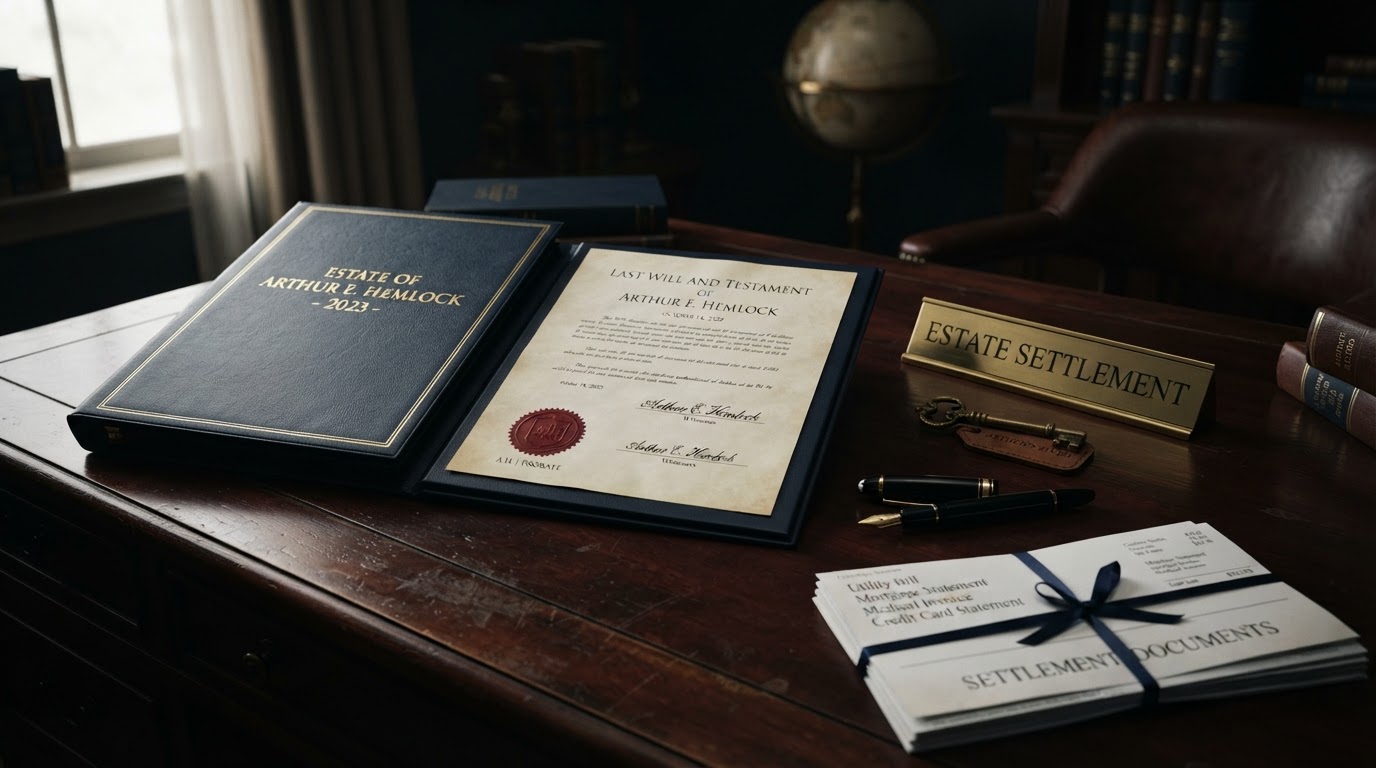
One of the most common — and most misunderstood — questions in legacy planning is what happens to your debt when you die. People worry that their children will inherit their credit card balances, their medical bills, or their business loans. The good news is that, in most cases, debt does not pass directly to your heirs. The more complicated news is that debt does not simply disappear either — it passes to your estate, and how that estate is structured determines everything. At Blueprint Business Advisors, Damon Boswell and Ashley Boswell help clients build legacy plans that account for this reality, because protecting your family means planning for what happens to your obligations, not just your assets. Here is an honest, web-researched look at what happens to debt after death in 2026.
The Basic Rule: Debt Belongs to the Estate
According to the Consumer Financial Protection Bureau, generally, when a person dies, their money and property will go towards repaying their debt. In other words, your debts are paid out of your estate — the total of the assets you leave behind — before whatever remains is distributed to your heirs. 'Debt does not vanish, and it does not automatically transfer to your children,' explains Damon Boswell. 'It becomes a claim against your estate. The question is whether there is enough in the estate to satisfy those claims, and in what order they get paid.'
When Are You Responsible for Someone Else's Debt?
The CFPB identifies specific circumstances where a surviving person may be responsible for a deceased person's debt. You may be responsible if you are the executor or administrator of the estate and your state law requires executors to pay an outstanding bill out of jointly owned property. You may also be responsible if you are a surviving spouse living in a community property state that requires surviving spouses to use jointly held property to pay debts of a deceased spouse. 'These are narrow exceptions, not the general rule,' notes Ashley Boswell. 'Most adult children are not personally liable for their parents' debts. But spouses in certain states need to pay close attention.'
Community Property States: A Critical Exception
This is where it gets important for married couples. According to the CFPB, community property states that may require surviving spouses to use jointly held property to pay a deceased spouse's debts include Alaska (if a special agreement is signed), Arizona, California, Idaho, Louisiana, Nevada, New Mexico, Texas, Washington, and Wisconsin. In these states, debts acquired during the marriage may be considered community debt, and jointly held property can be used to satisfy them — even if only one spouse signed for the debt. 'If you live in a community property state, the rules are different, and you need to understand them before a crisis hits,' warns Damon Boswell. 'What feels like your separate property may be reachable for your spouse's debts.'
Co-Signers and Joint Account Holders
Beyond spouses, another clear exception is co-signers and joint account holders. If you co-signed a loan with someone who dies, you remain fully responsible for that debt — the obligation does not end with the other person's death. The same is true for joint credit card accounts. 'Co-signing is one of the most dangerous financial decisions people make,' says Ashley Boswell. 'You are not just vouching for someone while they are alive. You are committing to pay if they cannot — including if they pass away.' This is why we counsel clients to think very carefully before co-signing for family members.
What Happens During Probate
When someone dies, their estate typically goes through probate — the court-supervised process of distributing assets. During probate, the executor of the estate is responsible for identifying the deceased's debts, notifying creditors, and paying valid claims from estate assets before distributing the remainder to heirs. According to MetLife, most debt is not inherited by someone else — instead, it passes to the estate, and during probate, the executor typically pays off debts using the estate's assets. 'Probate is where debts get settled,' explains Damon Boswell. 'It is also where things get slow, public, and expensive — which is exactly why we help clients use trusts to avoid it.'
What Happens When There Is No Estate?
If the deceased left no assets — or very few — there may be nothing for creditors to claim. According to the CFPB, when state law requires the estate to pay survivors first, there may not be any money left over to pay debts. In those cases, creditors generally cannot pursue family members personally, unless one of the specific exceptions (co-signer, joint account, community property spouse) applies. 'If there is no estate, there is usually nothing for creditors to take,' notes Ashley Boswell. 'But that also means there is nothing for your heirs to inherit — which is the deeper problem we help clients solve.'
How Debt Collectors Can and Cannot Communicate
The CFPB is clear that it is not legal for debt collectors to state or imply that you are personally responsible for paying a deceased person's debts from your own assets, unless your situation falls into one of the specific circumstances that would make you legally obligated. Collectors can contact the executor or administrator of the estate to discuss the debt, and in some cases they can contact a spouse or family member to ask about the estate — but they cannot mislead you into believing you personally owe the debt. 'If a collector tells you that you owe your deceased parent's credit card balance, that is often a violation,' says Damon Boswell. 'Know your rights, and do not let pressure tactics trick you into paying a debt you do not legally owe.'
Secured vs. Unsecured Debt After Death
The type of debt matters. Secured debts — like a mortgage or auto loan — are tied to an asset. If the estate or heirs want to keep the house or car, someone has to keep making the payments. If no one does, the lender can foreclose or repossess. Unsecured debts — like credit cards, medical bills, and personal loans — are paid from the estate's general assets, and if there is not enough, those creditors typically take a loss. 'Secured debt follows the asset,' explains Ashley Boswell. 'Unsecured debt follows the estate. Understanding the difference shapes every legacy plan.'
How a Living Trust Changes the Picture
This is where legacy planning directly intersects with debt after death. A revocable living trust helps your assets avoid probate — which means they transfer to your beneficiaries more quickly, privately, and inexpensively. But it is important to be honest about what a trust does and does not do with debt. A trust does not erase your debts — creditors can still make claims against the assets in the trust. What it does is streamline the process, keep it private, and give your successor trustee clear authority to settle legitimate claims and distribute the remainder without months of court supervision. 'A trust does not make debt disappear,' notes Damon Boswell. 'It makes the settlement orderly, private, and faster — which is a huge gift to a grieving family.'
Why This Matters for Business Owners
For entrepreneurs, the debt-after-death question is even more complex. Business debt, personal guarantees, commingled funds, and entity structure all interact. If you personally guaranteed a business loan and then pass away, your estate may be on the hook — which is exactly why we help clients build business credit without personal guarantees and maintain clean separation between personal and business finances. 'A business owner who has not separated personal and business liability can pass a mess to their family,' warns Ashley Boswell. 'The entity structure, the credit profile, and the estate plan all have to work together.'
How Blueprint Business Advisors Helps
Damon Boswell and Ashley Boswell help clients establish revocable living trusts, coordinate the full estate planning document package, and pair it with financial coaching and asset protection strategies so your family is protected no matter what happens. We help you understand how your debts, your assets, and your entity structure interact — and build a plan that settles your affairs cleanly and privately. We are not a law firm, and estate planning documents should be reviewed with a qualified attorney in your state. 'Our goal is to help you protect what you have built and pass it on without a court battle,' says Damon Boswell. 'That means planning for your debts, not just your assets.'
Start With a Free Consultation
If you have been putting off estate planning because you do not consider yourself wealthy yet — or because the topic feels overwhelming — it is time to get ahead of it. Book a free, no-pressure consultation with Damon and Ashley at Blueprint Business Advisors. We will review your assets, your debts, your business structure, and your goals, and help you build a legacy plan that protects your family from the chaos of probate and creditor claims.
Important Disclaimer
Blueprint Business Advisors is not a law firm and does not provide legal advice. Information about debt after death, community property, and probate is general in nature and varies by state; consult a qualified attorney licensed in your state for legal matters specific to your situation. We assist with preparation and coordination of estate planning documents; we do not guarantee specific legal outcomes, tax savings, or creditor protection. We are not a lender; all approval decisions, rates, amounts and terms are determined by third-party lenders and creditors. The information cited is based on publicly available guidance from the Consumer Financial Protection Bureau and MetLife and is educational, not legal advice.

