Whether you need a delivery van, commercial kitchen gear, construction machinery, or a fleet of laptops, equipment is often the lifeblood of a growing business — and one of its biggest expenses. Few entrepreneurs have the cash to buy everything outright, which is why, according to the Equipment Leasing and Financing Association, roughly 82% of American companies use some form of financing when acquiring equipment. But equipment financing is not a single product; it's a landscape of loans, leases, and terms, each with different trade-offs. At Blueprint Business Advisors, Ashley Boswell and Damon Boswell help clients understand and prepare for that landscape rather than signing the first agreement a vendor puts in front of them. Here's an honest, web-researched look at how equipment financing works in 2026.
What Is Equipment Financing?
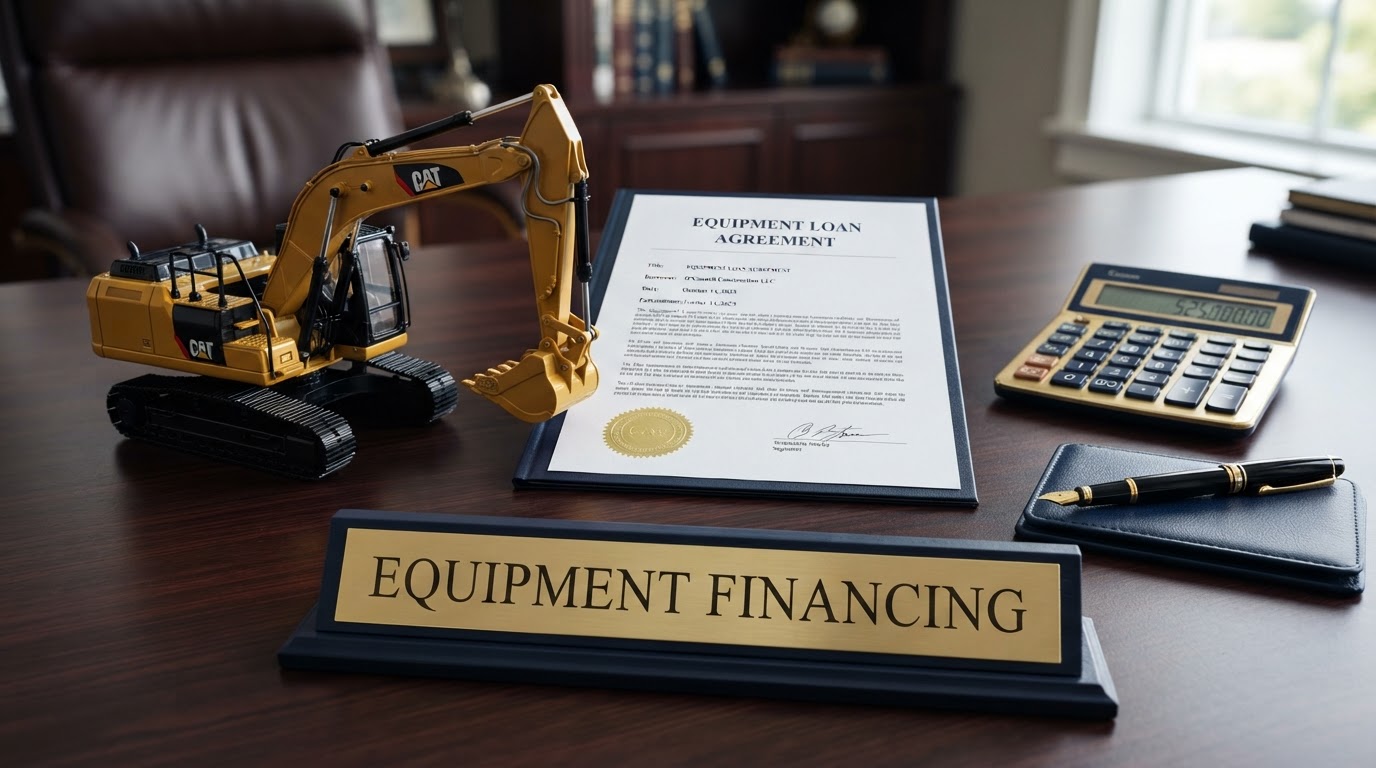
Equipment financing is a loan or lease used specifically to purchase business-related equipment. The equipment itself often serves as collateral for the loan, which reduces the lender's risk and can lead to more favorable terms than an unsecured loan. 'The equipment backs the loan, which is why equipment financing is often more accessible than a general business loan,' explains Damon Boswell. 'But that also means the lender can repossess the equipment if you default.' Instead of paying the entire equipment cost upfront, the business finances it over time, subject to the lender's terms — preserving cash for operations, payroll, and the unexpected.
How the Process Works
The process typically follows a clear path. First, the business applies for an equipment loan through a bank, credit union, or alternative lender, providing information about its financial health, credit history, and the equipment to be purchased. If approved, the lender offers a loan amount based on the equipment's value and the business's creditworthiness, with terms including interest rate, repayment schedule, and loan duration. The business then uses the loan to purchase the equipment — the lender may pay the vendor directly — and repays the loan over a set period through regular installments of principal and interest. Once the loan is fully repaid, the business owns the equipment outright. 'It's a straightforward structure, but the details in the agreement are where people get hurt,' warns Ashley Boswell. 'Rates, fees, and term length all matter enormously.'
Equipment Loans: The Pros
Financing equipment through a loan has real advantages. At the end of the loan term, you own the equipment outright, and it becomes an asset on your balance sheet. Interest payments on equipment loans may be tax-deductible, and businesses may also benefit from depreciation deductions — including Section 179, which allows businesses to deduct the full purchase price of qualifying equipment in the year it's placed in service. Equipment financing usually involves fixed monthly payments, making it easier to budget and manage cash flow. And because the equipment serves as collateral, you can often secure lower interest rates than with unsecured loans. 'Ownership and tax benefits are the two big draws of financing,' says Damon Boswell. 'If the equipment has a long useful life, buying it through a loan usually makes sense.'
Equipment Loans: The Cons
The trade-offs are real, too. The business bears the risk of equipment depreciation, which can reduce the value of the asset over time. If the equipment quickly becomes obsolete — think fast-moving technology — you may be stuck paying off a loan on tools that no longer serve you. While financing reduces the immediate burden, upfront costs like down payments and loan fees may still apply. And securing an equipment loan often requires good credit, which can be a barrier for newer or financially struggling businesses. 'Depreciation and obsolescence are the twin risks of ownership,' notes Ashley Boswell. 'You have to honestly assess how long this equipment stays useful before committing to a multi-year loan.'
Equipment Leasing: The Alternative
Leasing equipment is essentially renting it for a predetermined term. The main benefit is lower upfront costs — leasing typically requires little to no down payment, preserving working capital for operations, payroll, and emergencies. Leases are often used for equipment that faces rapid obsolescence and needs frequent upgrades, such as IT hardware, specialized medical devices, and software systems. Many lease agreements include maintenance and repair coverage, and leasing may have more lenient credit requirements than financing. 'Leasing is about flexibility and preserving cash,' explains Damon Boswell. 'If the equipment will be outdated in three years, you don't want to own it for seven.'
Leasing: The Trade-Offs
The biggest downside to leasing is that you don't build equity — at the end of an operating lease, you don't own the equipment and must either return it or negotiate a new lease. Leasing can be more expensive over the long term than purchasing, especially with high-interest capital leases. Lease agreements may carry usage restrictions and penalties for excessive wear, early termination, or exceeding mileage limits. And while lease payments are often fully deductible, you don't benefit from depreciation deductions the way an owner does. 'Leasing trades long-term cost for short-term flexibility,' says Ashley Boswell. 'Neither option is universally better — it depends on the asset, your cash flow, and your timeline.'
How to Decide: Buy or Lease?
The decision comes down to a few key factors. Consider the useful lifespan of the equipment: if it has a long life and won't become obsolete, financing to own usually makes sense; if it faces rapid obsolescence, leasing protects you from being stuck with outdated tools. Analyze your cash flow — how much capital can you allocate without risking operations? Think about your tax strategy: is it better to deduct lease payments as an expense or claim depreciation on purchased assets? And weigh ownership versus flexibility. 'We sit down with clients and walk through these factors using their real numbers,' notes Damon Boswell. 'Once you map the equipment's lifespan against the financing term, the right answer usually becomes clear.'
Watch the Fees and Penalties
Whether you finance or lease, read the fine print. Common fees include origination and processing fees, and large fees can offset the benefit of a lower interest rate. Equipment loans may carry prepayment penalties — typically 1% to 5% of the remaining balance — if you pay off the loan early. Leases can carry early termination fees set on a sliding scale, sometimes 10% or more. 'The advertised rate is never the full story,' warns Ashley Boswell. 'You have to understand the total cost of the arrangement, fees included, before you sign.'
The Funding Concierge Approach
Instead of sending you from lender to lender, we review your profile, identify suitable funding options and help package your application correctly. The service may include reviewing personal and business credit, income, revenue and bank statements; identifying potential products; organizing documents; assisting with applications; comparing offers; and explaining possible next steps. For equipment financing specifically, instead of paying the entire equipment cost upfront, the business finances it over time, subject to the lender's terms — and we help you understand which lenders and structures fit your situation. 'Every funding product has a trade-off,' Damon Boswell advises. 'Speed costs money. Flexibility costs money. Our job is to help you understand which trade-off actually fits your business.'
How Blueprint Business Advisors Helps
Ashley Boswell and Damon Boswell review the client's business structure, credit profile, financial documentation and goals. We may help establish business credit accounts, monitor reporting, identify potential financing sources and package applications. We help qualified clients pursue appropriate personal and business funding opportunities. Funding amounts vary according to creditworthiness, income, revenue, lender criteria and repayment ability. No minimum approval amount is guaranteed. We are not the lender, and all approvals, limits, rates and terms are determined by third-party creditors. 'Our goal is to help you become funding-ready and connect you with financing options that fit your business,' says Ashley Boswell. 'We can't guarantee approval, but we can help you understand and prepare for the process.'
Start With a Free Consultation
If you're weighing an equipment purchase and aren't sure whether to buy or lease, don't guess. Book a free, no-pressure consultation with Ashley and Damon at Blueprint Business Advisors. We'll review your business, your cash flow, and your equipment needs — and help you understand which financing path may be appropriate for you.
Important Disclaimer
Blueprint Business Advisors is not a lender. We assist with preparation and placement only. All approval decisions, rates, amounts and terms are determined by third-party lenders and creditors. We do not guarantee approval, any specific funding amount, a particular credit-score increase, or any specific outcome. Tax treatment of equipment financing and leasing depends on your individual circumstances; consult a qualified tax professional. The statistics cited are based on third-party industry research and are illustrative, not guarantees.