When entrepreneurs hear 'business funding,' most immediately think of one thing: a loan. But the reality is that small business financing is an entire landscape of different products, each with its own rules, eligibility requirements, and trade-offs. At Blueprint Business Advisors, Ashley Boswell and Damon Boswell help clients understand and prepare for that landscape rather than blindly submitting applications. Here's an honest, web-researched look at how SBA loans and other small business financing options actually work in 2026.
The Big Misconception: The SBA Does Not Lend You Money
The first thing every entrepreneur needs to understand is that the U.S. Small Business Administration does not directly lend you money in the 7(a) program. The SBA sets the guidelines for loans that are then made by participating lenders — banks, credit unions, and specialized lending companies. The SBA guarantees a portion of the loan, which reduces the lender's risk, but you always work directly with the lender, not with the SBA. 'A lot of founders walk in thinking they're applying to the government for a check,' says Damon Boswell. 'You're not. You're applying to a lender who follows SBA rules.'
What Is an SBA 7(a) Loan?
The 7(a) loan program is the SBA's most common and flexible loan program. According to the SBA, eligible businesses must be an operating business, operate for profit, be located in the United States, be small under SBA size requirements, not be a type of ineligible business, and be creditworthy with a reasonable ability to repay the loan. The 7(a) program allows proceeds to be used for working capital, inventory, business acquisition, equipment, and real estate — which is a big reason it's the most-used SBA program. 'The 7(a) is flexible, but that flexibility comes with documentation requirements,' explains Ashley Boswell. 'Lenders want to see that you can actually repay.'
SBA Eligibility: The Six Things Lenders Review
According to SBA lending guidance, lenders evaluate six core areas when reviewing an application: business and industry eligibility, ownership and character, credit profile, financial capacity, collateral and use of proceeds, and the SBA's 'credit elsewhere' rule. The 'credit elsewhere' test means the business must not be able to obtain the desired credit on reasonable terms from non-government sources. 'This is the requirement people don't know about,' notes Damon Boswell. 'The SBA is a backstop, not a first resort. You have to show you couldn't get conventional financing first.'
Ownership, Citizenship, and Character Requirements
SBA rules tightened in 2026 around ownership eligibility. Legal Permanent Residents are no longer eligible to hold any ownership interest in an SBA loan applicant, operating company, or eligible passive company. A business is also ineligible if any owner or guarantor is considered an 'Ineligible Person,' which includes foreign nationals, asylum seekers or refugees, visa holders or nonimmigrant aliens, and DACA recipients. Beyond citizenship, SBA rules require good character from all owners and guarantors. 'If your ownership structure includes anyone in those categories, the SBA route isn't going to work in 2026,' Ashley Boswell advises. 'We help clients confirm this early so they don't lose months on a dead-end application.'
Financial Capacity and the Debt-Service Coverage Ratio
Lenders look at historical and projected revenue to understand whether your income is consistent, growing, or volatile. Existing debt matters because a new SBA loan stacks on top of it, not in place of it. As of March 1, 2026, the SBA requires a debt-service coverage ratio (DSCR) equal to or greater than 1.10:1 for SBA 7(a) small loans. That means your business's available cash flow must be at least 1.10 times the amount needed to cover its debt payments. 'The DSCR is the number that kills more applications than anything else,' says Damon Boswell. 'If your cash flow can't cover the new payment with margin, the lender stops reading.'
Credit Profile: There Is No Universal Minimum Score
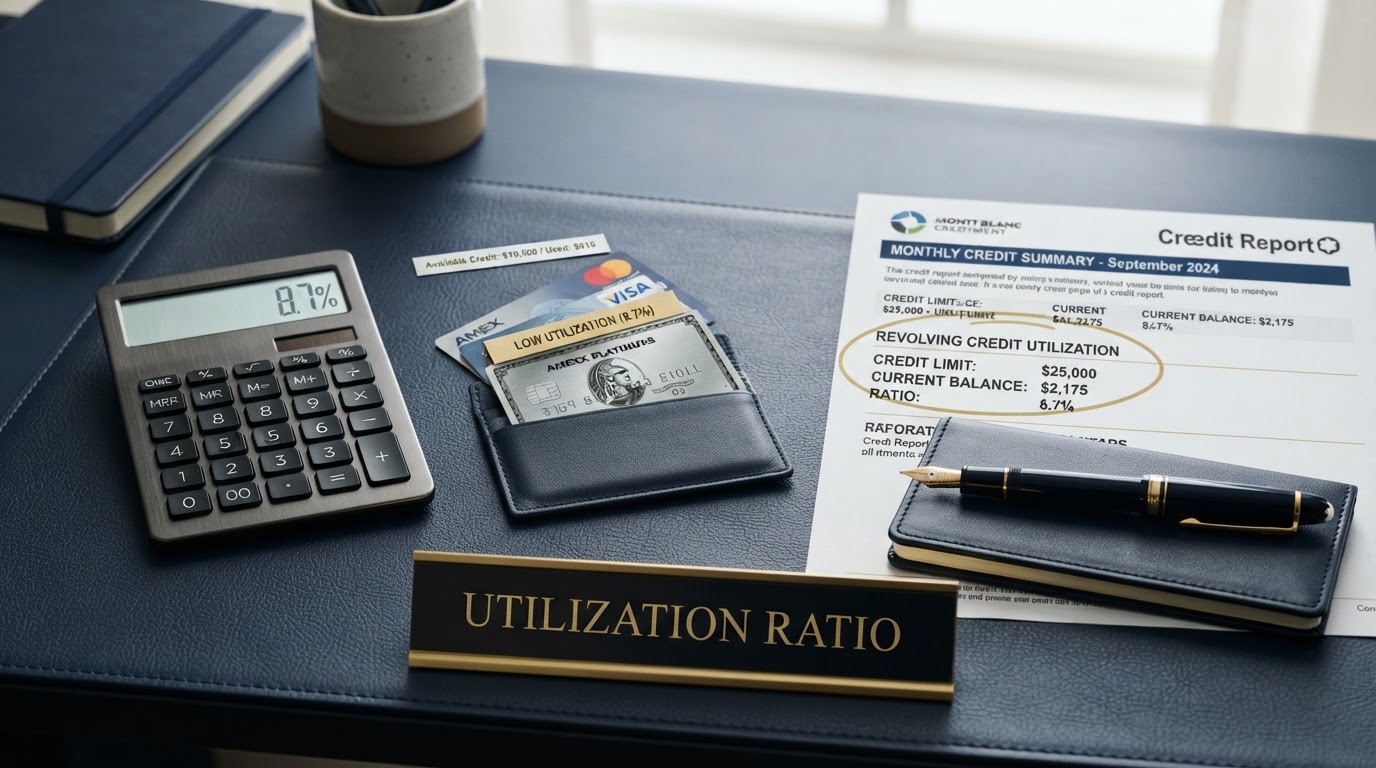
The SBA itself does not set a universal minimum credit score for 7(a) and 504 loans. Instead, lenders apply their own credit policies on top of SBA rules. They consider personal credit history for owners and, where relevant, business credit history. This is exactly why building a standalone business credit profile matters — it gives lenders a second data point beyond your personal score. 'We help make sure your business is properly structured and visible to the major business-credit bureaus so it can begin developing its own credit profile,' explains Ashley Boswell. 'Scores and reporting are controlled by the credit bureaus, and no perfect business credit score is guaranteed — but a clean profile removes one more reason for a lender to say no.'
How to Apply: You Work With a Lender, Not the SBA
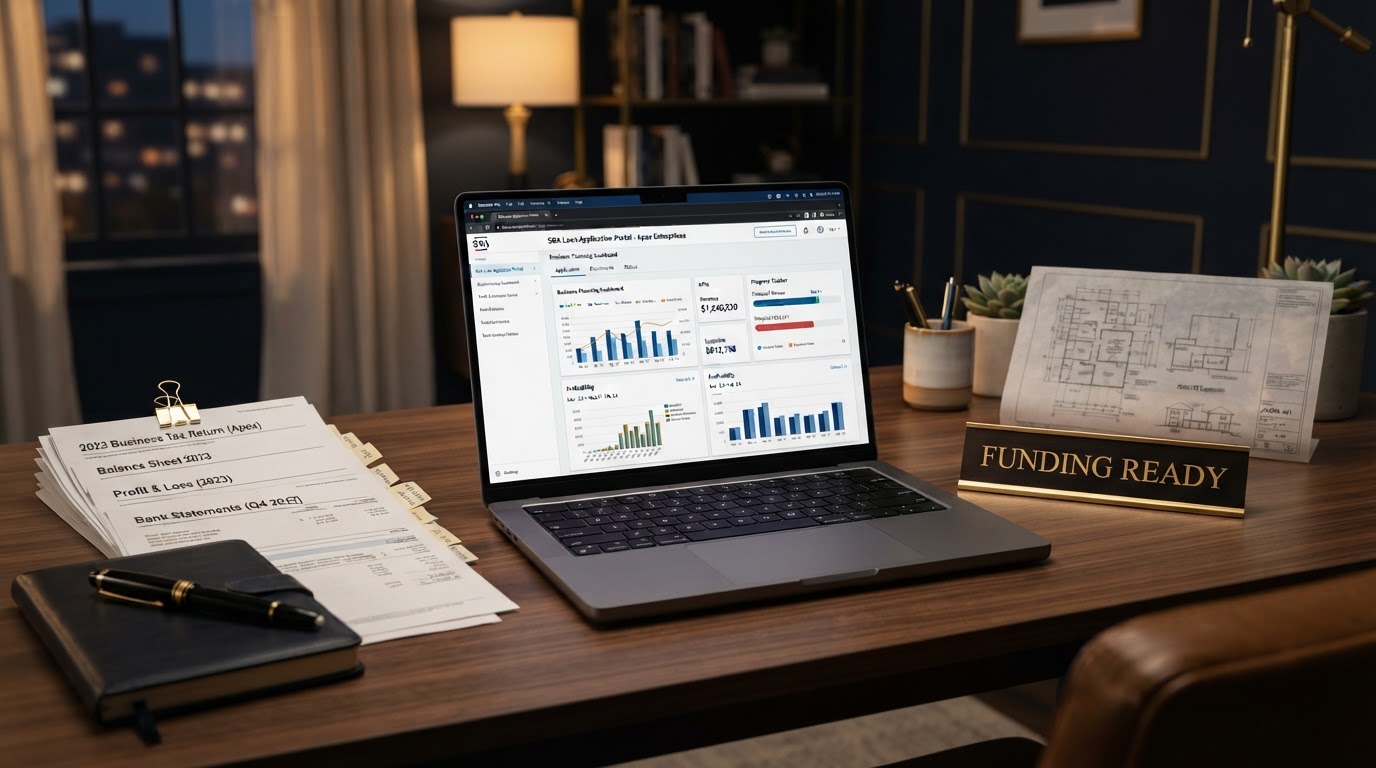
You apply for a 7(a) loan directly through a local lender. The SBA offers a Lender Match tool to connect you with participating lenders, but the application itself is between you and that lender. The documents required vary depending on the size of the loan and the lender's processing method, but typically include a business plan, personal and business financial statements, tax returns, and a statement of how the loan will be used. 'We help package your application correctly — reviewing your credit, income, revenue and bank statements, organizing documents, and assisting with the application,' says Ashley Boswell. 'The cleaner your file, the faster the decision.'
Beyond SBA: Other Financing Options
SBA loans are not the only path, and they're not always the right one. At Blueprint Business Advisors, we help clients understand several alternatives. For equipment financing, instead of paying the entire equipment cost upfront, the business finances it over time, subject to the lender's terms — this can make sense when the equipment itself generates revenue. For revenue-based funding, this may be an option for businesses with consistent revenue that need faster access to working capital, but we carefully review the total repayment and payment schedule, because the cost of capital can be significantly higher than a traditional loan. 'Every funding product has a trade-off,' Damon Boswell advises. 'Speed costs money. Flexibility costs money. Our job is to help you understand which trade-off actually fits your situation.'
The Funding Concierge Approach
Instead of sending you from lender to lender, we review your profile, identify suitable funding options and help package your application correctly. The service may include reviewing personal and business credit, income, revenue and bank statements; identifying potential products; organizing documents; assisting with applications; comparing offers; and explaining possible next steps. We help qualified clients pursue appropriate personal and business funding opportunities. Funding amounts vary according to creditworthiness, income, revenue, lender criteria and repayment ability. No minimum approval amount is guaranteed. 'We're not the lender,' Ashley Boswell emphasizes. 'We're the team that gets you to the lender with your best foot forward.'
What About Grants?
A lot of entrepreneurs come to us asking about 'free government money' for their business. Here's the honest truth: there are no federal grants for starting a for-profit business. We research grant opportunities for which a client or organization may be eligible — but grants are limited, competitive, and never guaranteed. 'If someone is promising you guaranteed grant money for your business, walk away,' Damon Boswell warns. 'Real grants require a real application, a real mission, and real eligibility.'
How Blueprint Business Advisors Helps
Ashley Boswell and Damon Boswell review the client's business structure, credit profile, financial documentation and goals. We may help establish business credit accounts, monitor reporting, identify potential financing sources and package applications. We help eligible businesses prepare for financing offered by participating lenders under SBA guidelines. We are not the lender, and all approvals, limits, rates and terms are determined by third-party creditors. 'Our goal is to help you become funding-ready and connect you with financing options that fit your business,' says Ashley Boswell. 'We cannot guarantee approval, but we can help you understand and prepare for the process.'
Start With a Free Consultation
If you're tired of guessing at which funding option is right for your business, it's time to get a real roadmap. Book a free, no-pressure consultation with Ashley and Damon at Blueprint Business Advisors today. We'll review your business, your credit, your documentation, and your goals — and help you understand exactly which financing path may be appropriate for you.
Important Disclaimer
Blueprint Business Advisors is not a lender. We assist with preparation and placement only. All approval decisions, rates, amounts and terms are determined by third-party lenders and creditors. We do not guarantee approval, any specific funding amount, a particular credit-score increase, or any specific funding outcome. SBA loan eligibility is determined by the SBA and participating lenders. Government grants are limited, competitive and never guaranteed. We are not affiliated with the U.S. Small Business Administration.